-

Saint Agnes
A young woman stands solemnly, her lamb resting at her feet. Gold leaf halos her head as she clutches a palm frond—martyrdom’s quiet symbol. The folds of her robe drape with weight, as if carved from stone. Her gaze holds something unbroken, even in stillness.
-
-full.webp "The Adoration of the Magi (ca. 1320) by Giotto di Bondone")
The Adoration of the Magi (ca. 1320)
Three kings kneel before the newborn, their rich robes pooling on the rough stable floor. Gold glints in offered vessels as the child reaches toward the gifts. A donkey noses at straw in the shadows, unnoticed by the awestruck visitors. The scene hums with quiet reverence, earthly splendor bowing to divine simplicity.
-
-full.webp "Belshazzar’s feast (from 1634 until 1639) by Rembrandt van Rijn")
Belshazzar’s feast (from 1634 until 1639)
A ghostly hand etches fiery letters across the banquet hall as golden goblets slip from trembling fingers. The revelry dies mid-laugh—royal faces frozen between arrogance and terror. Babylon’s last feast shatters beneath divine judgment scrawled in light upon the wall.
-
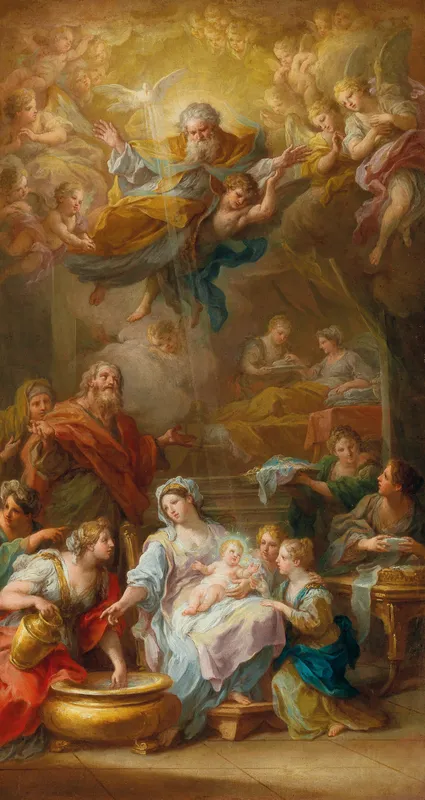
The Birth of the Virgin
Golden light spills across the room as women gather around the newborn Mary, their faces alight with quiet awe. Swirling fabrics and tender gestures frame the infant, hinting at the divine destiny awaiting her. The scene hums with quiet anticipation, a sacred moment wrapped in earthly warmth.
-
-full.webp "The raising of Lazarus (after Rembrandt) by Vincent van Gogh")
The raising of Lazarus (after Rembrandt)
A shrouded figure emerges from shadow, half-alive, as bystanders recoil in awe. The air hums with tension between death and revival, light clawing at the darkness. Rembrandt’s ghost lingers in the strokes, but the scene pulses with raw, urgent energy—less a miracle, more a struggle.
-
-full.webp "Saint Benedict (ca. 1640–45) by Francisco de Zurbarán")
Saint Benedict (ca. 1640–45)
A monk stands cloaked in shadow, gripping a wooden cross. The folds of his robe catch the light, stark against the darkness. His gaze is steady, unwavering—a quiet defiance. The painting hums with restrained power, drawing you into the stillness of his resolve.
-
-full.webp "Mary Magdalene (1540-50) by Moretto Da Brescia")
Mary Magdalene (1540-50)
A woman kneels in contemplation, her gaze turned inward. The light catches her flowing hair and the jar beside her—hints of a story untold. Rich fabrics drape around her, but it’s the quiet intensity in her posture that holds the eye. This is a moment suspended between devotion and mystery.
-
-full.webp "Rebecca At The Well (1869) by Émile Vernet-Lecomte")
Rebecca At The Well (1869)
Rebecca kneels by the well, her pitcher tilted as water spills over the rim. The desert sun glints off the surface, casting rippling shadows across her face. A stranger watches from the road—his camels thirsty, his fate unwritten. The moment hangs between kindness and destiny.
-
-full.webp "The Holy Family (1753) by Nöel Hallé")
The Holy Family (1753)
A tender scene unfolds—Mary cradles the infant Jesus while Joseph watches protectively. Warm light bathes the figures, their quiet intimacy framed by classical simplicity. The moment feels both sacred and strikingly human.