Baroque
A theatrical explosion of movement and emotion. Baroque art bends light and space to divine will, where swirling drapery and ecstatic gestures pull viewers into celestial dramas.
-
-full.webp "St. Peter in Prison (1631) by Rembrandt van Rijn")
St. Peter in Prison (1631)
A dim cell holds Saint Peter, chains heavy on his wrists. Light spills from an unseen angel, illuminating his weary face—caught between doubt and deliverance. The shadows press close, but the moment trembles with quiet transformation.
-
-full.webp "Saint Catherine of Alexandria (ca 1597) by Caravaggio")
Saint Catherine of Alexandria (ca 1597)
A young woman gazes upward, her face illuminated against the dark. A palm branch rests in her hand—martyrdom’s quiet symbol. The blade’s shadow looms near her neck, yet her expression holds neither fear nor triumph, only a stillness that lingers between life and something beyond.
-
-full.webp "A Young Woman Carrying A Basket Of Flowers (17th Century) by Roman School")
A Young Woman Carrying A Basket Of Flowers (17th Century)
A woman pauses mid-step, her basket brimming with blooms. The flowers spill over the woven edge, petals catching the light. Her gaze lingers just beyond the frame, as if hearing her name called. The folds of her dress sway with the weight of the harvest, alive with color against the muted earth.
-
-full.webp "Praying Madonna (Around 1665) by Michele Desubleo")
Praying Madonna (Around 1665)
A woman kneels in quiet devotion, hands clasped, gaze lowered. The folds of her robe catch the light, soft shadows pooling around her. There’s weight in her stillness—not just prayer, but surrender. The air around her seems to hold its breath.
-
-full.webp "The Magdalen with the Smoking Flame (circa 1635-37) by Georges de La Tour")
The Magdalen with the Smoking Flame (circa 1635-37)
A lone woman sits in shadow, her face lit by a single flame. The flickering light catches the curve of her skull, the folds of her robe, the stillness of her hands. A mirror lies facedown beside her. The air feels thick with quiet contemplation, the flame’s glow both intimate and isolating.
-
, Infanta of Spain (1651–54)-full.webp "María Teresa (1638–1683), Infanta of Spain (1651–54) by Diego Velázquez")
María Teresa (1638–1683), Infanta of Spain (1651–54)
The young Infanta gazes past the viewer, her stiff brocade gown and rigid posture belying the softness in her face. A hint of melancholy lingers beneath the formality of royal portraiture.
-
-full.webp "Belshazzar’s feast (from 1634 until 1639) by Rembrandt van Rijn")
Belshazzar’s feast (from 1634 until 1639)
A ghostly hand etches fiery letters across the banquet hall as golden goblets slip from trembling fingers. The revelry dies mid-laugh—royal faces frozen between arrogance and terror. Babylon’s last feast shatters beneath divine judgment scrawled in light upon the wall.
-
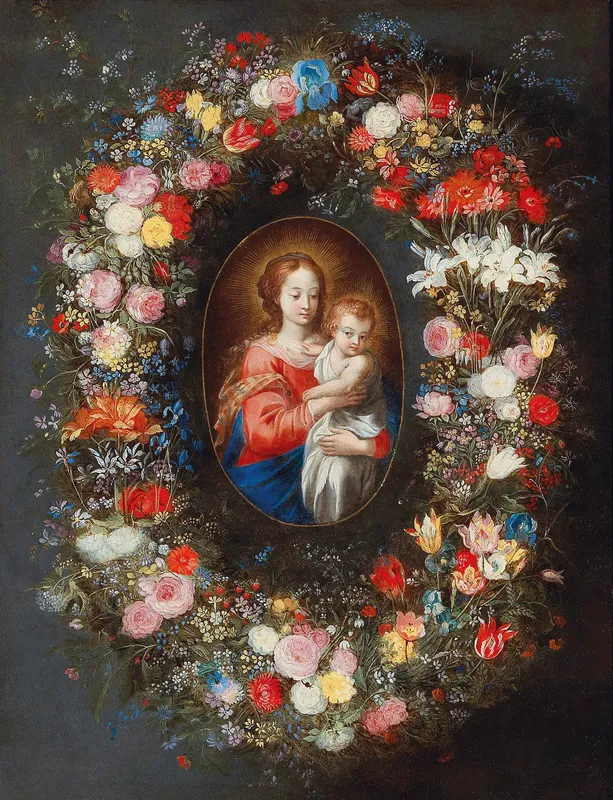
The Madonna and Child surrounded by a floral garland
A luminous Madonna cradles the infant Christ, encircled by a lush wreath of blooming flowers. Delicate petals frame the sacred pair, their vibrant colors contrasting with the serene figures. The garland bursts with life, as if nature itself bends to honor the divine mother and child.
-
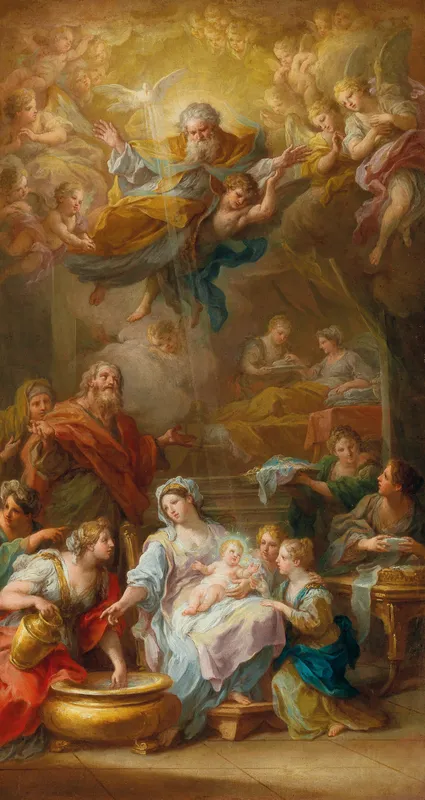
The Birth of the Virgin
Golden light spills across the room as women gather around the newborn Mary, their faces alight with quiet awe. Swirling fabrics and tender gestures frame the infant, hinting at the divine destiny awaiting her. The scene hums with quiet anticipation, a sacred moment wrapped in earthly warmth.